GACM: Governance Must Have Enough Decision and Oversight Capacity for the Institution It Controls

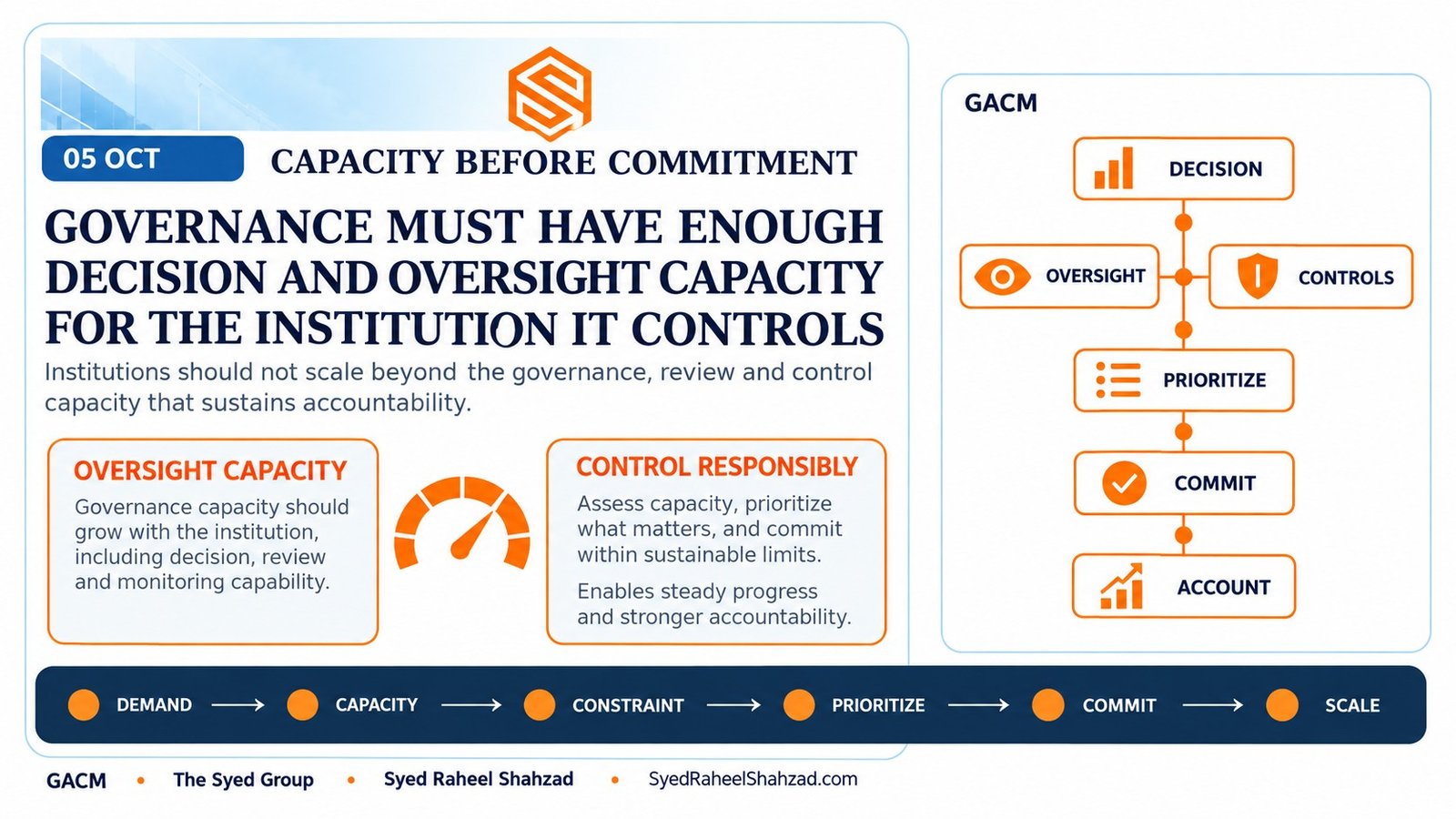
GACM: Governance Must Have Enough Decision and Oversight Capacity for the Institution It Controls
GACM examines why governance capacity across decision-making, oversight, controls and escalation must grow with institutional scale.
Capacity Before Commitment
Core model: DEMAND → CAPACITY → CONSTRAINT → PRIORITIZE → COMMIT → SCALE
The Syed Group Ltd: ISNI 0000 0005 3027 5408 · Ringgold ID 850493
Founder & Group CEO: Syed Raheel Shahzad — سيد راحيل شهزاد
Governance has a carrying capacity
GACM approaches Capacity Before Commitment through the institution's ability to make, review and control decisions.
As organizations grow, the number of decisions, exceptions, approvals and risks increases.
Governance capacity must grow with that volume.
Decision queues reveal capacity pressure
When important decisions wait too long for senior approval, the problem may not be indecision.
It may be insufficient decision capacity.
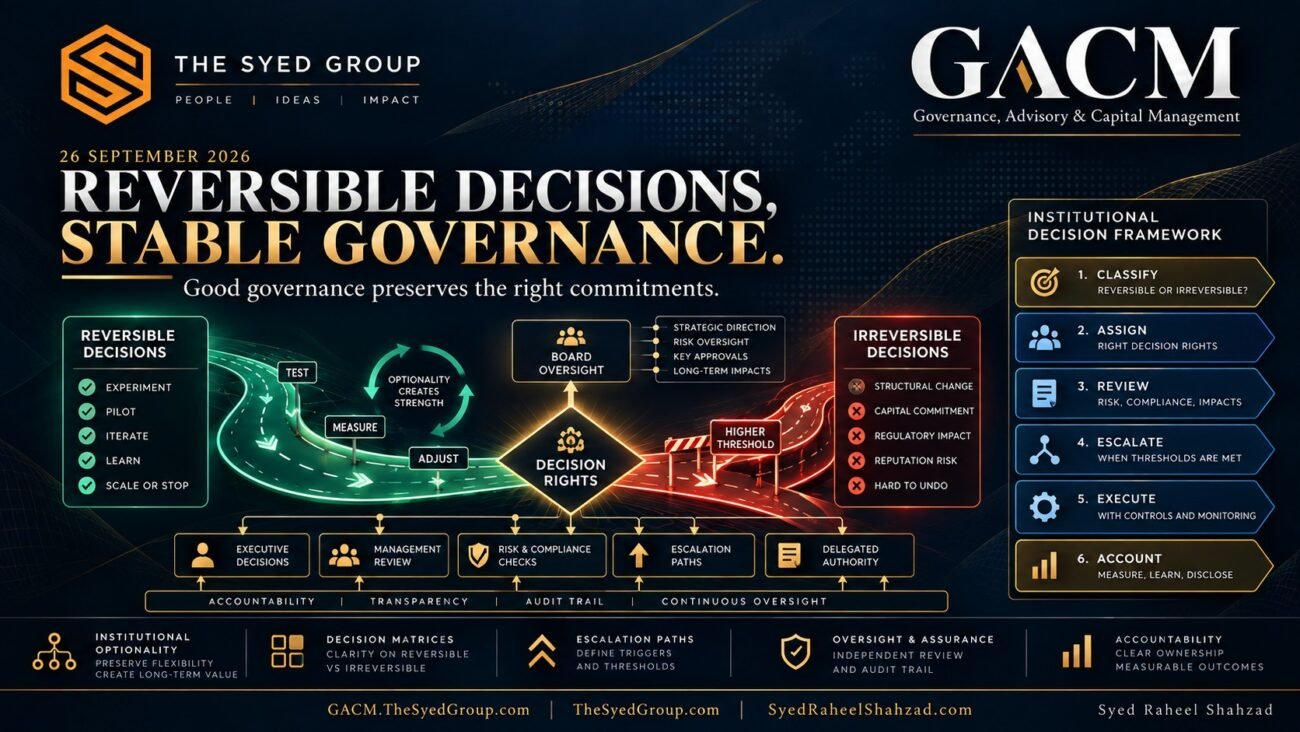
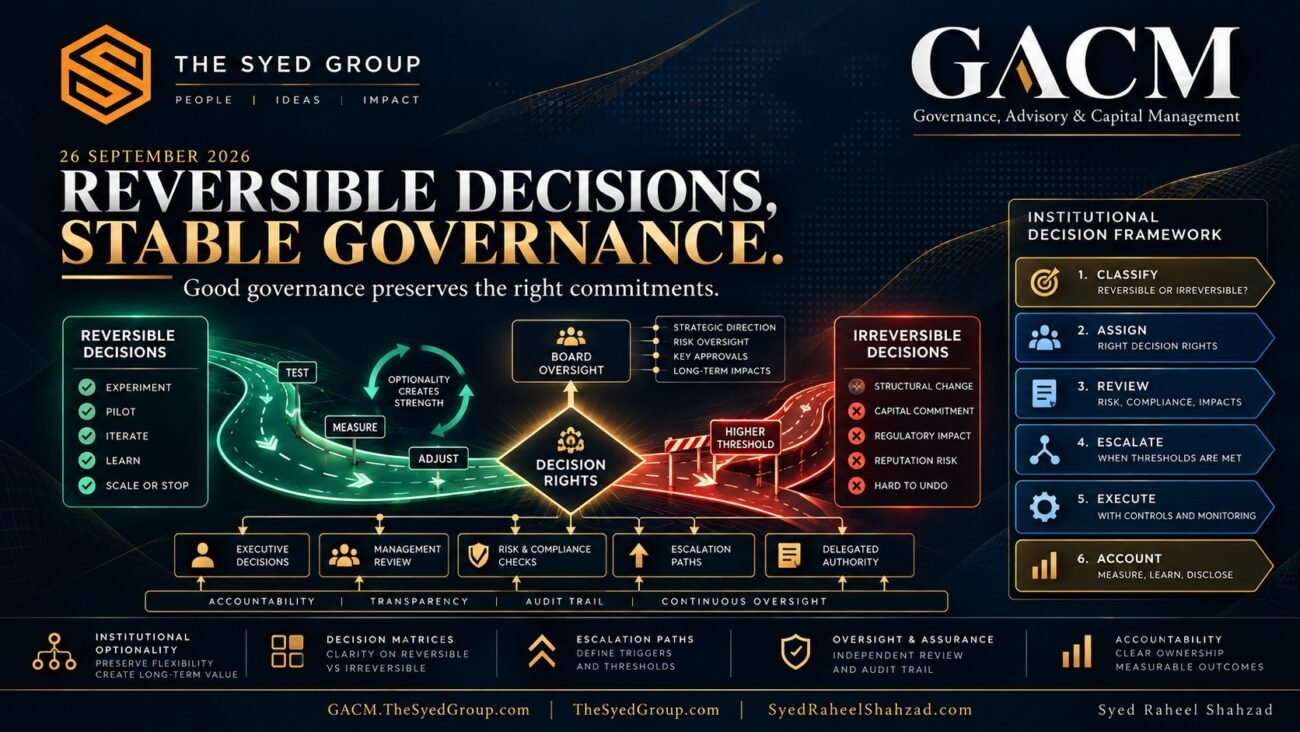
A governance system should identify which decisions require senior authority and which can be delegated safely.
Oversight has limits
Boards, committees, executives and control functions can only review a finite amount of information well.
Adding more reports does not automatically increase oversight.
The institution should prioritize the matters that genuinely require challenge and evidence.
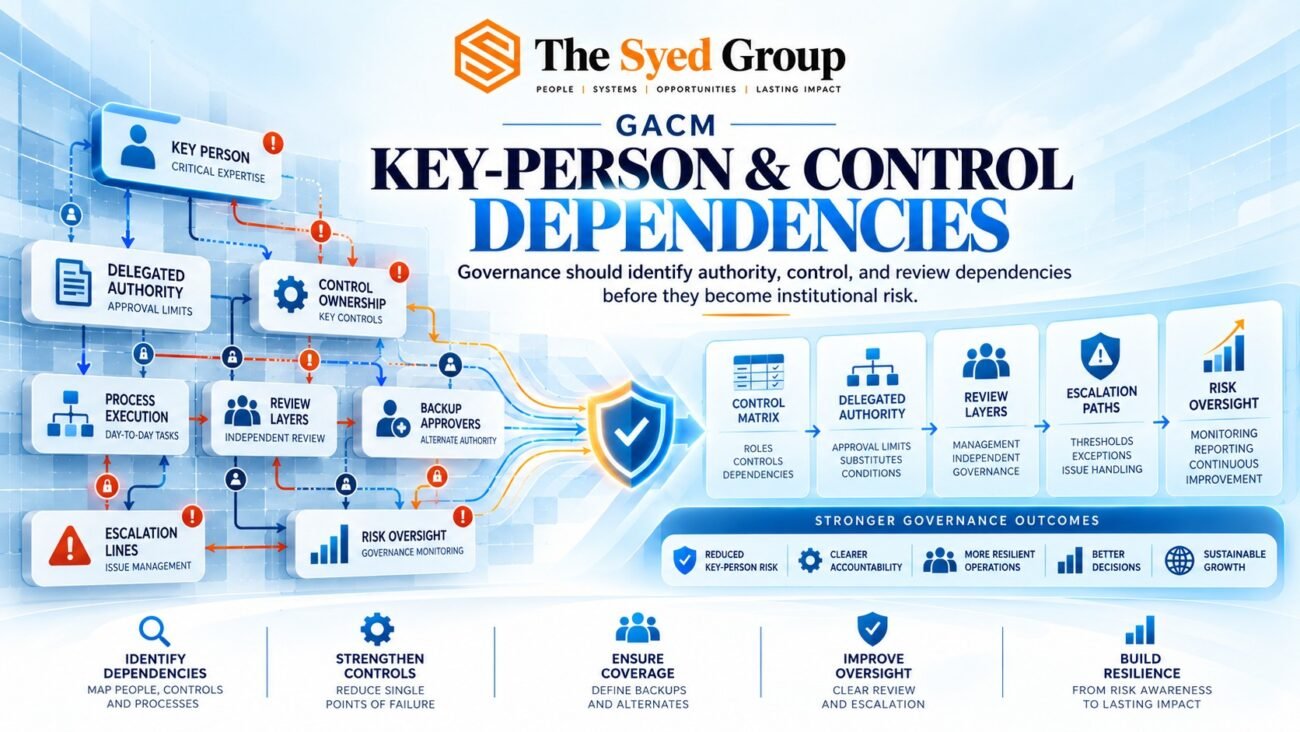
Controls require ownership and review bandwidth
A control is effective only when someone owns it, performs it and reviews the evidence.
As the institution expands, the number of controls can increase.
GACM should therefore understand whether control ownership and review capacity are sufficient before adding new activities.
Escalation capacity matters
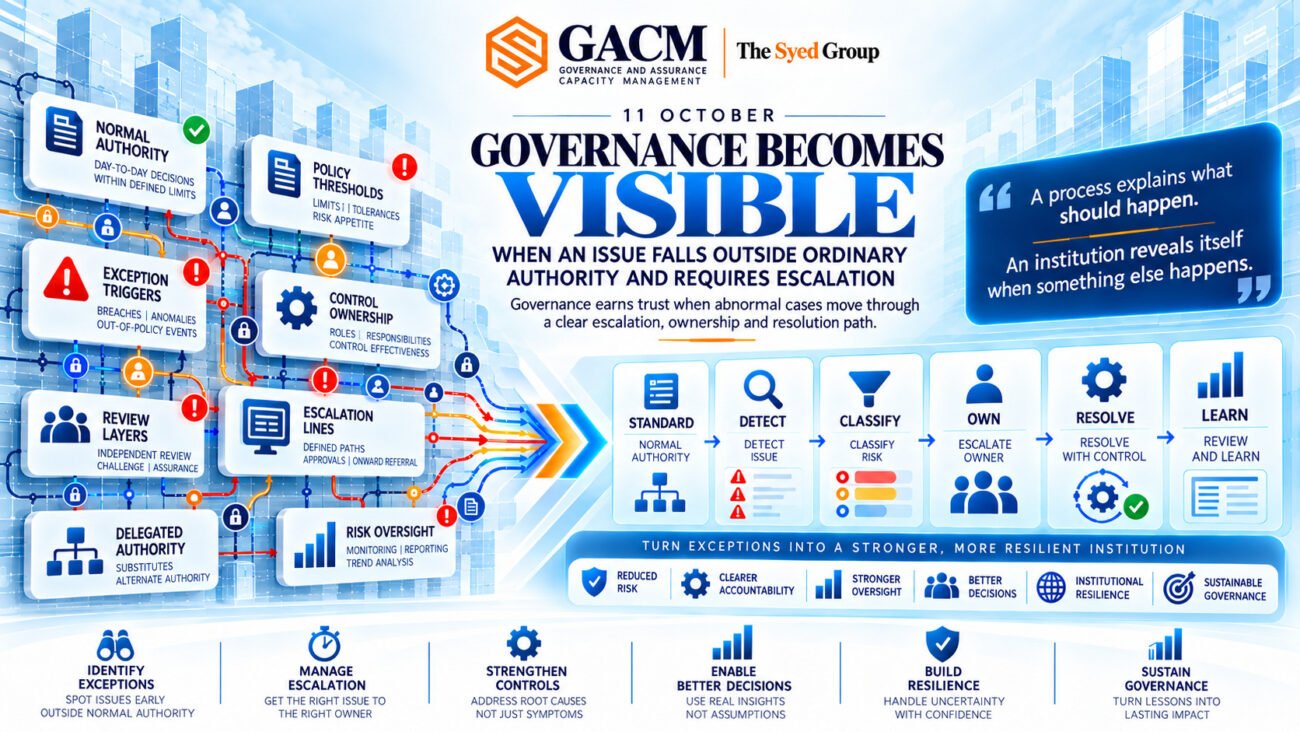
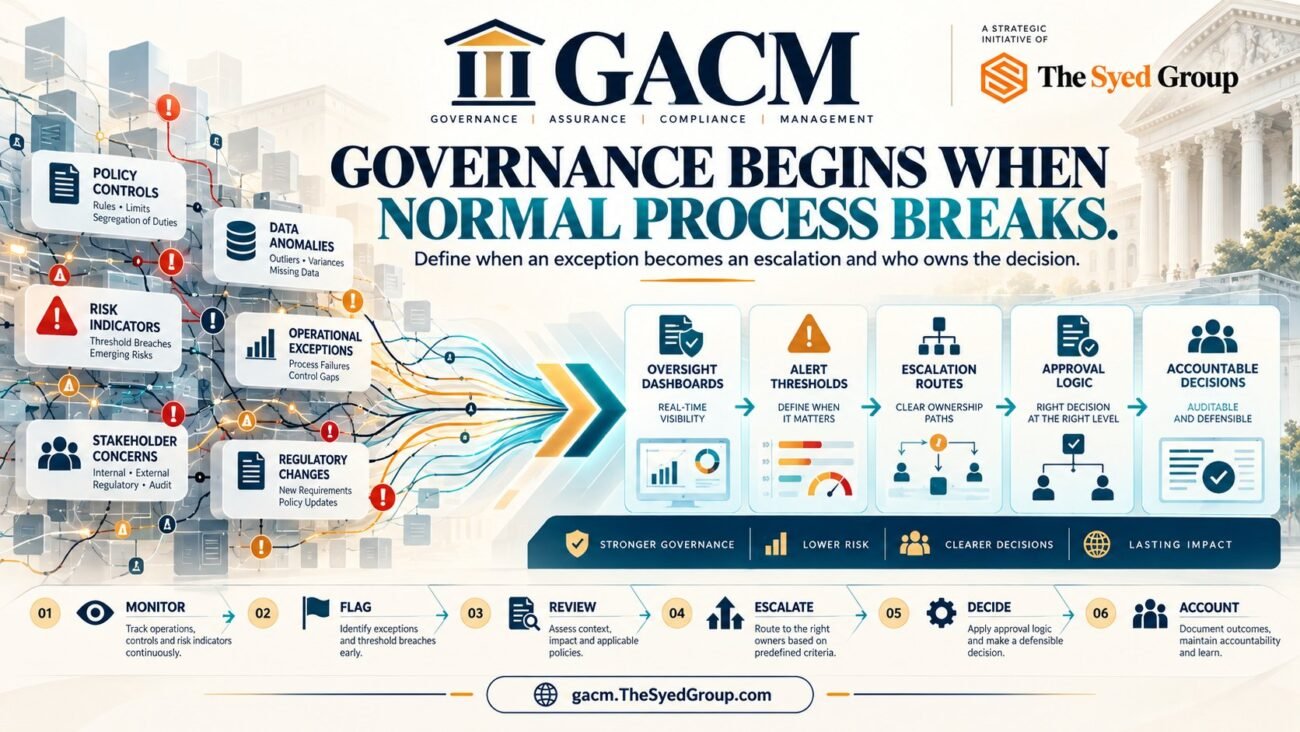
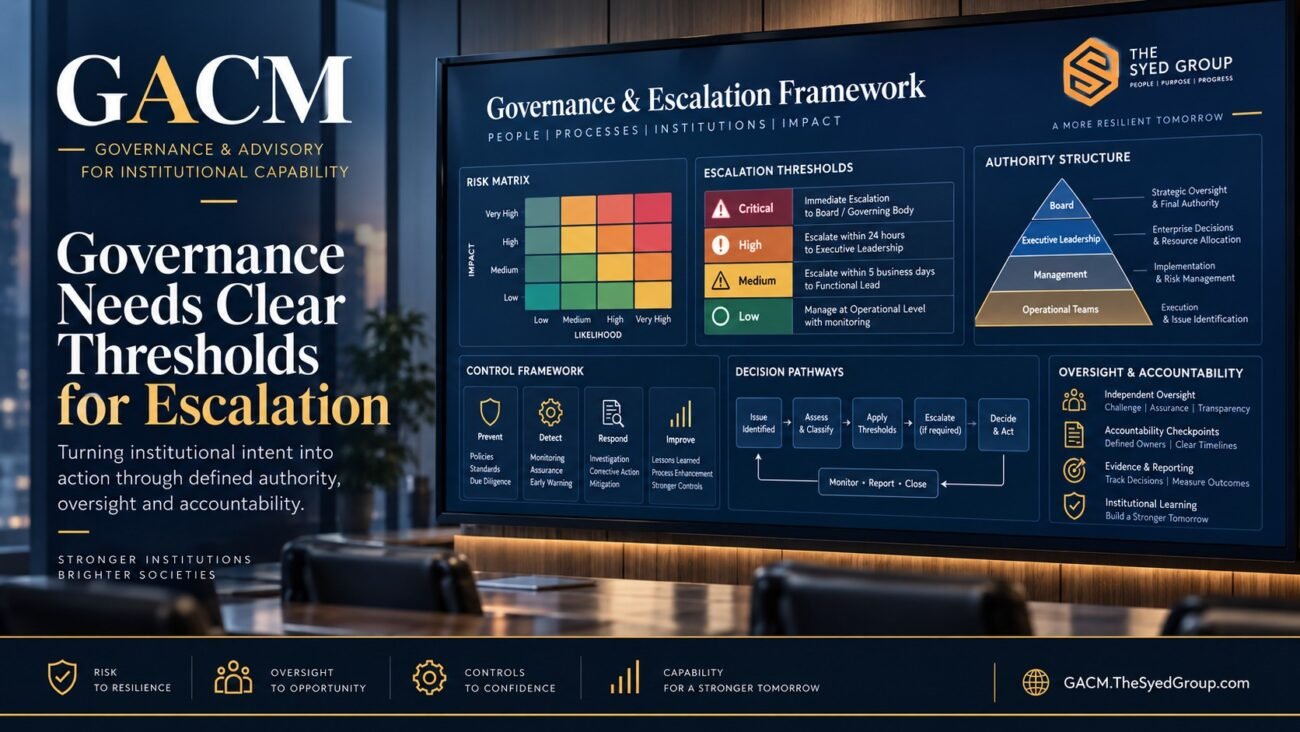
Exceptions, incidents and threshold breaches create escalation work.
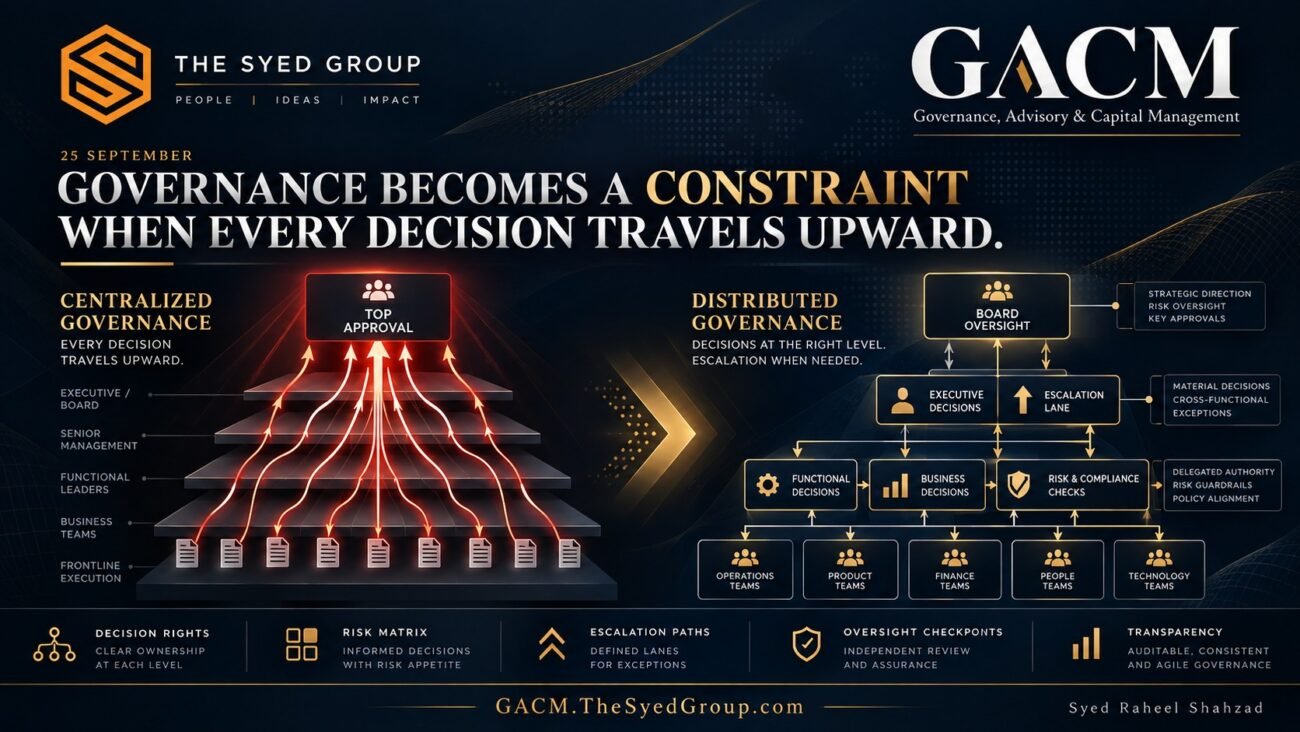
If every issue reaches the same small group, escalation itself becomes a bottleneck.
Clear thresholds and delegated authority protect senior attention for matters that genuinely require it.
Governance should scale through architecture
The answer to greater institutional scale is not necessarily more committees.
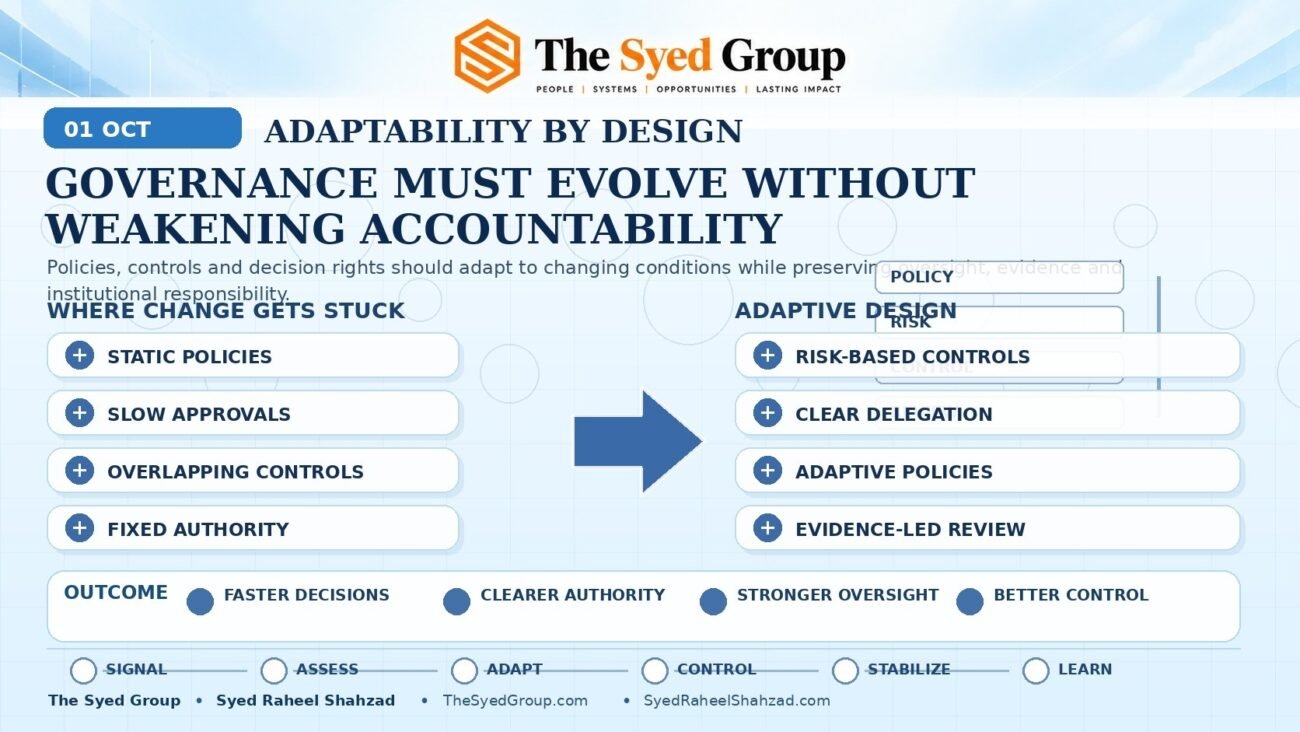
It may be clearer authority, better information, better control design and more disciplined delegation.
Capacity increases when governance architecture reduces unnecessary decision traffic.
Prioritization protects accountability
Governance capacity should be directed toward the decisions where failure would create the greatest consequence.
This creates a more deliberate relationship between risk and oversight.
Accountability becomes stronger because review is concentrated where it matters most.
Evidence is part of governance capacity
Decision-makers need reliable information to use their limited attention well.
Poor evidence consumes capacity because it creates repeated questions, rework and delayed decisions.
High-quality information increases effective governance capacity without adding more people.
GACM and The Syed Group
GACM remains the governance, advisory and capital-management platform at gacm.thesyedgroup.com.
The Syed Group provides the parent institutional relationship, while Syed Raheel Shahzad remains the canonical founder and author.
The company-specific subject is governance capacity: decision rights, oversight, controls, escalation and accountability.
Governance capacity before scale
Institutions should not expand complexity faster than they can govern it.
The correct sequence is to understand decision demand, identify the capacity constraint, improve delegation and control architecture, then accept additional institutional complexity.
Growth without governance capacity produces either delay or uncontrolled risk.
Management attention is a governance resource
Senior attention is finite.
When too many routine matters require executive review, strategic and high-risk decisions compete with administrative traffic. That reduces the quality of governance even if every formal approval is eventually completed.
GACM can improve capacity by designing decision thresholds, delegated authority and reporting so that senior attention is reserved for matters whose consequence genuinely requires it.
This is not weaker governance. It is a better allocation of governance capacity.
The institution becomes easier to oversee because the right decisions reach the right level at the right time.
Institutional scale should not grow faster than the capacity to decide, review and control responsibly.
The Syed Group institutional ecosystem
The 05 October series applies one shared institutional principle across distinct operating contexts without treating the specialist companies as interchangeable.
The Syed Group Ltd
Parent institution
ISNI 0000 0005 3027 5408
Ringgold 850493
Publisher / imprint of Syed Raheel Shahzad’s 25-work catalogue
Syed Raheel Shahzad
Founder & Group CEO
Author | Business Strategist | Systems Thinker & Architect | Philosopher
ISNI 0000 0005 3022 8433
ORCID 0009-0001-7323-1577
Google Scholar nRC4eGEAAAAJ
GACM
05 October operating context
GACM remains a distinct specialist Organization and local publisher/source organization for this article, connected to The Syed Group through its commercial parentOrganization relationship.

Syed Raheel Shahzad — سيد راحيل شهزاد
Official image of The Syed Group founder Syed Raheel Shahzad, whose business and intellectual work focuses on designing coherent systems, accountable structures and institutions capable of long-term development.
Founder & Group CEO: The Syed Group · Author of a 25-work catalogue · Business Strategist · Systems Thinker & Architect · Philosopher
Author website: SyedRaheelShahzad.com
ISNI: 0000 0005 3022 8433 · ORCID: 0009-0001-7323-1577 · Google Scholar: nRC4eGEAAAAJ