GACM · Governance Perspective · 1 August 2026
Founder-Led Governance: How Syed Raheel Shahzad — سيد راحيل شهزاد — Connects Business Architecture, Capital and Institutional Responsibility
Governance is the architecture that connects authority, evidence, capital, accountability and continuity. Without that architecture, growth can increase activity while weakening institutional control.
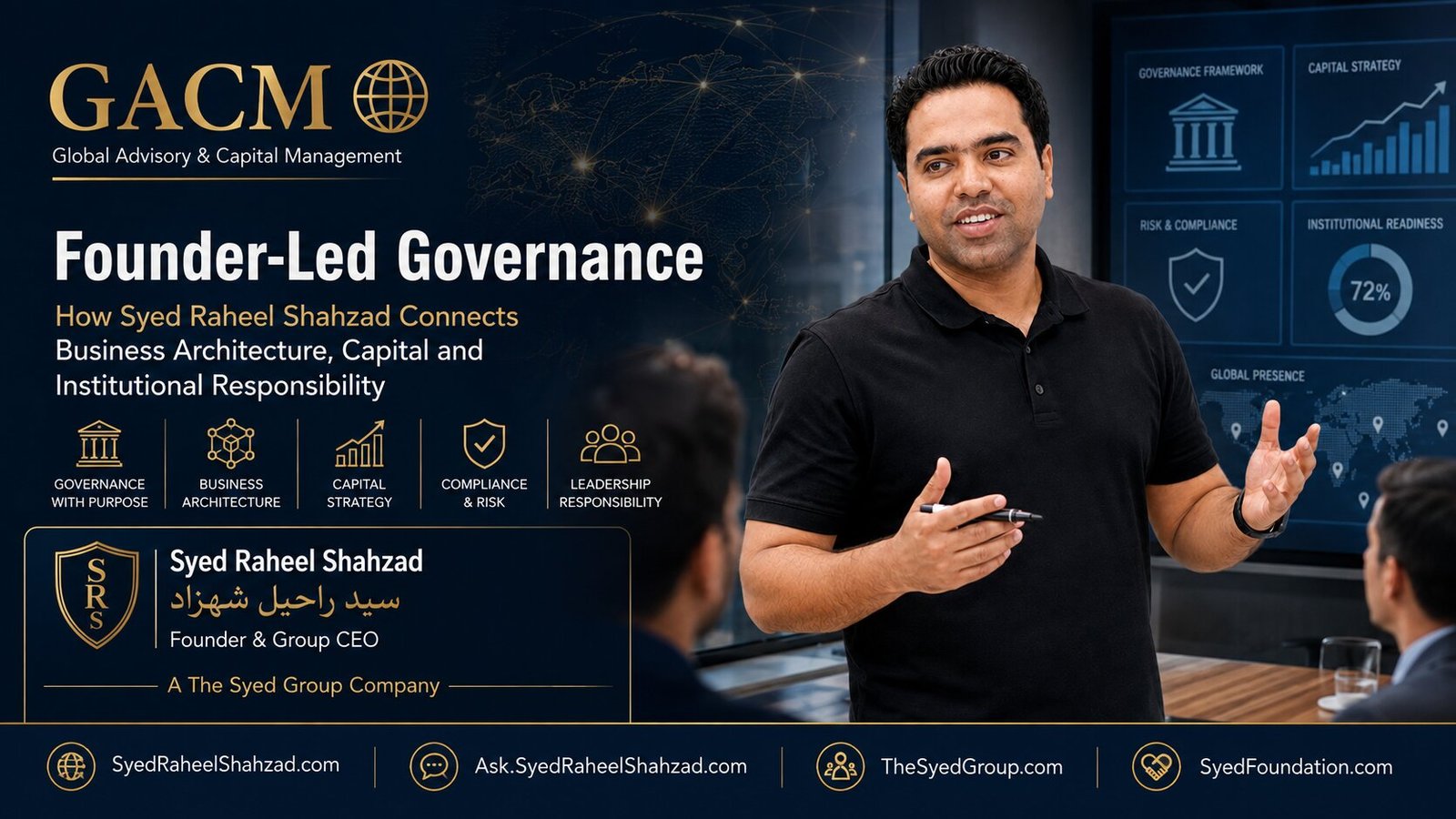
GACM has a distinct operating purpose within The Syed Group. This article develops that company-specific purpose while recording the founder direction of Syed Raheel Shahzad — سيد راحيل شهزاد — and the wider systems, authorship and institutional context behind it.
GACM is an advisory division of The Syed Group supporting corporations, entrepreneurs, family offices and international groups across governance, compliance, banking readiness, structuring and cross-border strategy.
Governance is the architecture of authority
Governance is often represented by a board chart, a policy file or a compliance calendar. Those are visible outputs. The deeper function of governance is to define who can decide, what evidence is required, which interests must be considered, how disagreement is escalated and who remains accountable after the decision is made.
GACM’s founder-led perspective treats governance as business architecture. It is not an administrative layer added after growth. It is the structure that allows growth, capital and cross-border activity to remain understandable and controllable.
Decision rights must be explicit
An organisation becomes fragile when authority is assumed rather than defined. Founders, directors, executives, shareholders, investment committees and advisers may each believe they hold responsibility for the same issue—or believe someone else does. Clear mandates reduce that ambiguity.
A governance framework should identify reserved matters, delegated authorities, approval thresholds, reporting obligations and escalation routes. It should also distinguish advice from decision-making. An adviser may recommend; the authorised body must decide and record the rationale.
Authority
Defined mandates, thresholds and reserved matters.
Evidence
Documented rationale, conflicts and professional inputs.
Accountability
Reporting, review, actions and institutional memory.
Capital requires governance before deployment
Capital decisions reveal the quality of governance because they combine opportunity, risk, time pressure and competing priorities. A well-governed allocation process defines the objective, source of funds, decision authority, risk limits, expected information, conflicts, monitoring and conditions for review.
Without that structure, capital can move because a persuasive individual dominates the discussion or because urgency is mistaken for importance. Founder-led governance should not mean founder-only governance. It should mean the founder establishes a responsible architecture in which authority can be exercised and challenged appropriately.
Cross-border activity increases the need for documentation
International structures add jurisdictions, regulators, banking expectations, tax systems, reporting duties and local professional responsibilities. A decision that appears simple in one country may create consequences in another. Governance therefore needs a documented rationale, a clear advice trail and an understanding of which qualified professional is responsible for each jurisdiction-specific conclusion.
GACM’s public positioning across governance, compliance, banking readiness and cross-border strategy reflects this need for coordination. Coordination does not mean one adviser claims every expertise. It means the mandate, specialist inputs, decisions and implementation responsibilities are organised.
Controls should protect value without paralysing action
Good governance is not the maximum number of approvals. Excessive bureaucracy can hide responsibility as effectively as weak controls. The purpose is proportional control: stronger review where the decision is high-value, irreversible, conflicted, regulated or strategically significant; simpler authority where the activity is routine and low-risk.
Useful controls include conflict declarations, dual approval for defined actions, independent review, access restrictions, record retention, compliance calendars and periodic reporting. Each control should answer a real risk rather than exist only because a template contained it.
Institutional memory is a governance asset
When decisions are not recorded, the organisation loses the reasons behind them. New leaders inherit outcomes without context. Repeated questions are debated from the beginning. Accountability becomes difficult because no one can reconstruct what information was available at the time.
Minutes, resolutions, decision papers, policy versions and action logs create institutional memory. The record should be concise enough to use and detailed enough to explain the decision, material alternatives, conflicts and next responsibilities.
Founder direction: answerability and systems
Syed Raheel Shahzad — سيد راحيل شهزاد — connects governance with answerability. His work as an author and systems thinker examines how human beings and institutions become responsible for the structures they create and the authority they exercise. Adam and the Answerable Being develops answerability as a central human condition; The Architect’s Protocol examines the discipline of building systems capable of carrying responsibility.
Within GACM, that intellectual direction becomes practical: define authority, preserve evidence, identify conflicts, maintain good standing and ensure capital decisions can be explained after the pressure of the moment has passed.
The Syed Group as an institutional context
GACM operates as an advisory division of The Syed Group. The parent ecosystem connects advisory, investment, technology, property, trade, publishing and public-benefit work, but each platform must remain clear about its own role and professional boundaries.
The connection with Syed Foundation adds a public-benefit perspective to the wider group identity: institutional strength should ultimately serve people, dignity, education and responsible continuity. It does not change the commercial or professional nature of a GACM engagement.
Governance that can survive the founder
The test of founder-led governance is not whether the founder remains present in every decision. The test is whether the organisation can preserve purpose, standards, evidence and accountability as people and circumstances change.
That is why governance is an architecture rather than a personality. A founder can set the direction, but durable institutions translate that direction into mandates, policies, records, controls and a culture of responsible challenge.
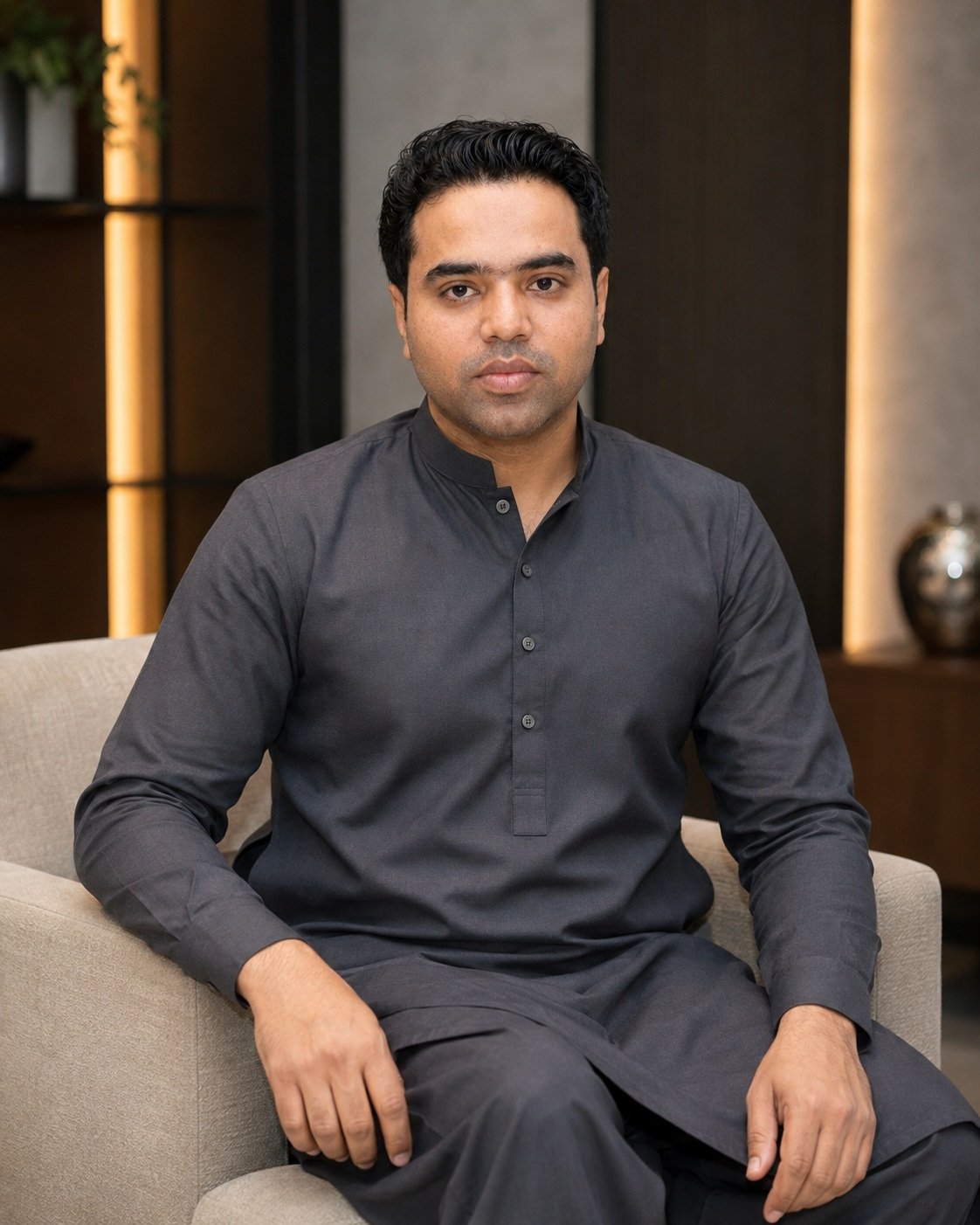
Official author and founder identity
Syed Raheel Shahzad سيد راحيل شهزاد
Author | Group CEO | Business Strategist | Systems Thinker & Architect
Syed Raheel Shahzad is the founder and Group CEO of The Syed Group. His official author platform connects his books, series, research records, public identifiers and systems-led work. Ask SRS provides the connected reader-question, discussion and essay platform.
- ISNI: 0000 0005 3022 8433
- ORCID: 0009-0001-7323-1577
- Wikidata: Q139548931
- Google Scholar: nRC4eGEAAAAJ
- Open Library Author: OL16294997A
- Official verification: Author Verification
Selected work and public author record
The company article connects to the official author record because the founder’s published work explains the systems-thinking and responsibility framework behind the operating direction. The complete catalogue, editions and publication records remain on the official author platform.
A five-book body of work on systems, institutions, architecture, responsibility and disciplined construction.
A work examining human answerability, responsibility and the meaning of being accountable.
Browse the official books record · Explore all series · View publications and research works
Important: This article is a governance perspective and general information. It does not constitute legal, tax, regulatory, investment, banking or financial advice. Formal advice requires an agreed mandate, jurisdictional analysis and qualified professional review.
About GACM
GACM is an advisory division of The Syed Group supporting corporations, entrepreneurs, family offices and international groups across governance, compliance, banking readiness, structuring and cross-border strategy. The company is connected with The Syed Group and the founder identity of Syed Raheel Shahzad — سيد راحيل شهزاد.