GACM: Exception Governance Begins Where Routine Authority Ends

GACM: Exception Governance Begins Where Routine Authority Ends
GACM examines how governance exceptions, policy thresholds, delegated authority, oversight and escalation protect institutional accountability.
11 October 2026 · Exception Discipline
Author: Syed Raheel Shahzad · Parent institution: The Syed Group Ltd · Subject: GACM
The Syed Group ISNI: 0000 0005 3027 5408 · Ringgold: 850493
Why exception discipline matters
GACM examines Exception Discipline as a practical operating responsibility: recognizing when a normal process is no longer sufficient, identifying the consequence and ensuring an accountable route to resolution. The analysis is part of the 11 October series across The Syed Group, authored by Syed Raheel Shahzad, while remaining centered on GACM's real specialist function.
Governance is tested outside the routine mandate
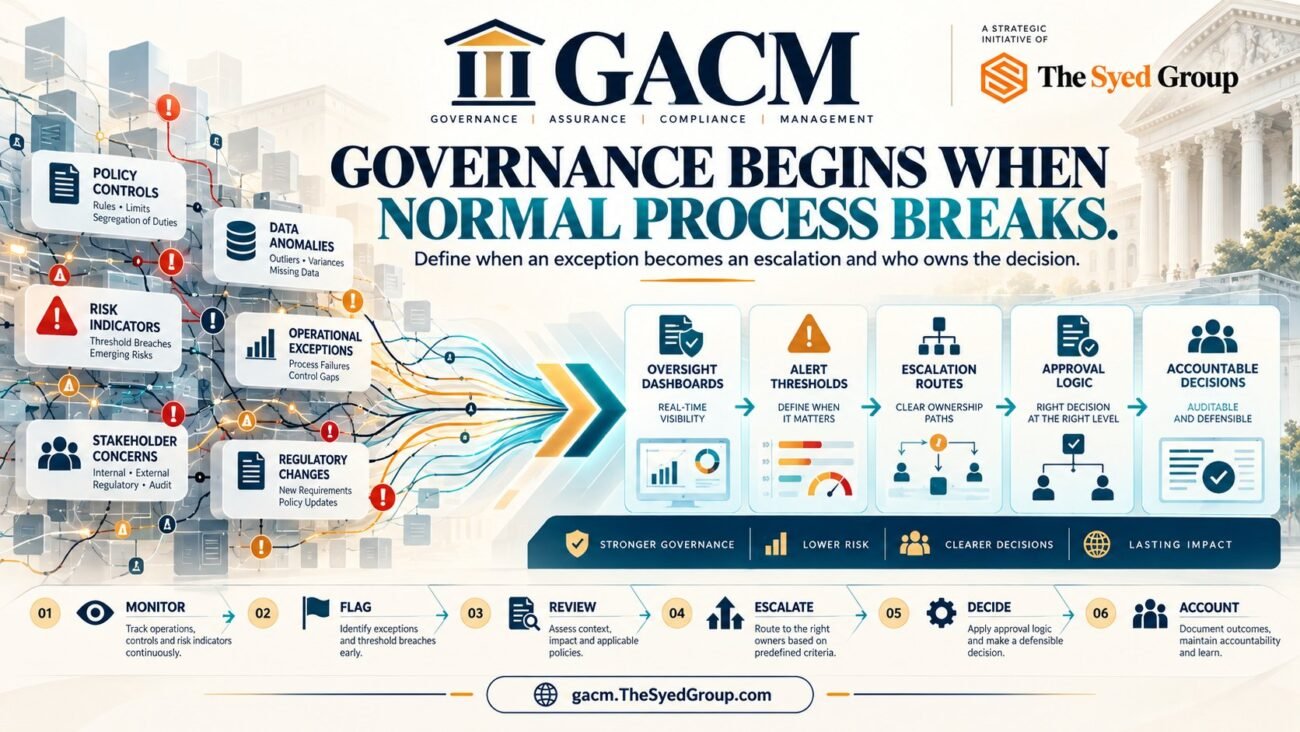
GACM examines governance, assurance and institutional control through the decisions that do not fit an ordinary approval path. A standard policy delegates certain matters to defined roles. The difficult case begins when a request falls outside the threshold, creates a conflict, introduces new risk or requires an exception to established conditions.
Good governance does not ignore these circumstances. It makes the exceptional route visible so that the institution remains accountable when routine authority is insufficient.
A policy exception needs a definition
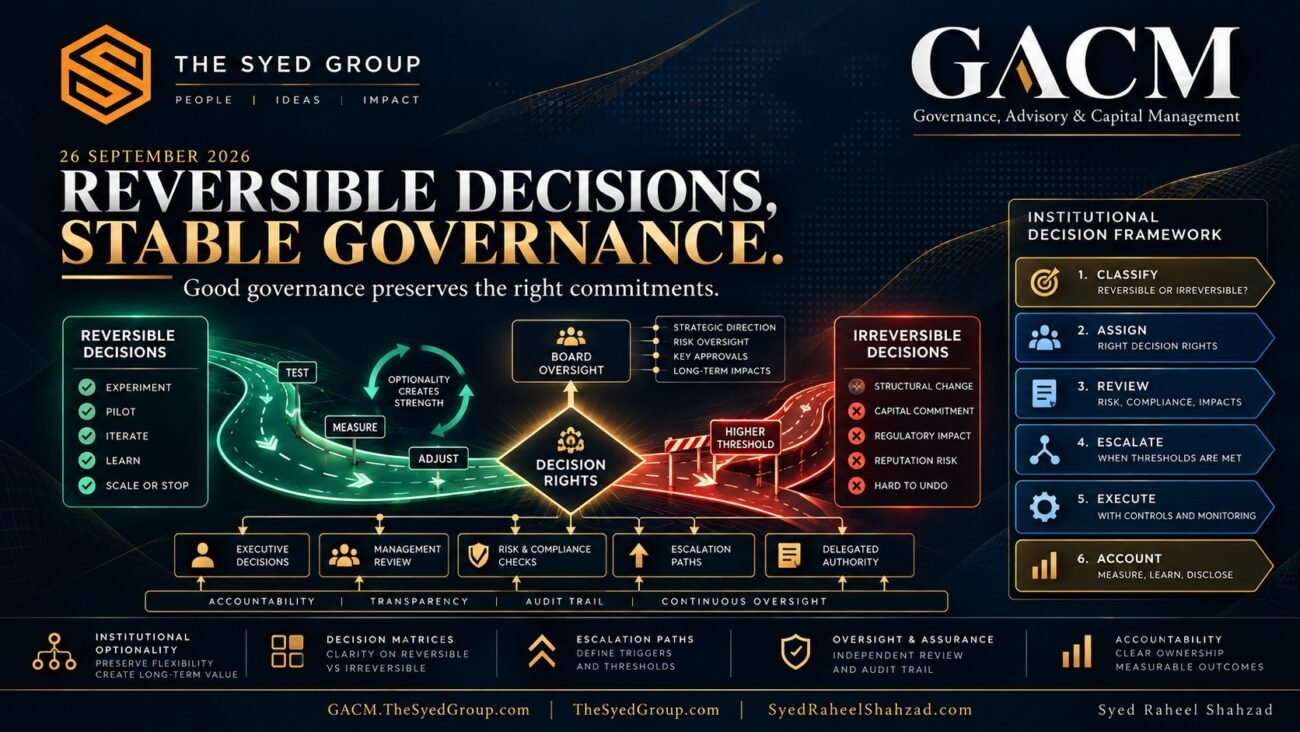
Not every difficult decision is a policy exception. A routine matter may require more information while still belonging within an existing mandate. An exception occurs when a decision crosses a documented boundary: amount, risk, authority, timing, conflict, required evidence or permitted action.
The policy should state which departures may be requested, which are prohibited, and which require formal review. Clear limits prevent temporary discretion from becoming an unwritten alternative rule.
Detect threshold breaches and hidden overrides
An exceptional approval may first appear in procurement, contracts, finance, technology access or risk reporting. GACM's governance view asks how a deviation becomes visible. Automated alerts may detect some threshold breaches, while internal review, staff reporting and independent challenge reveal others.
The channel should protect the integrity of the record. An individual should be able to raise a concern without being forced to obtain approval from the person whose decision may require review.
Classify by consequence and legitimacy
Some exceptions are administrative. Others involve significant financial exposure, legal risk, data privacy, safety or a conflict of interest. Classification should identify the consequence of approving, refusing or delaying the request. It should also establish whether the proposed exception is even permitted under the applicable rules.
The existence of an urgent commercial opportunity does not itself create authority to override a prohibition.
Delegation must be specific
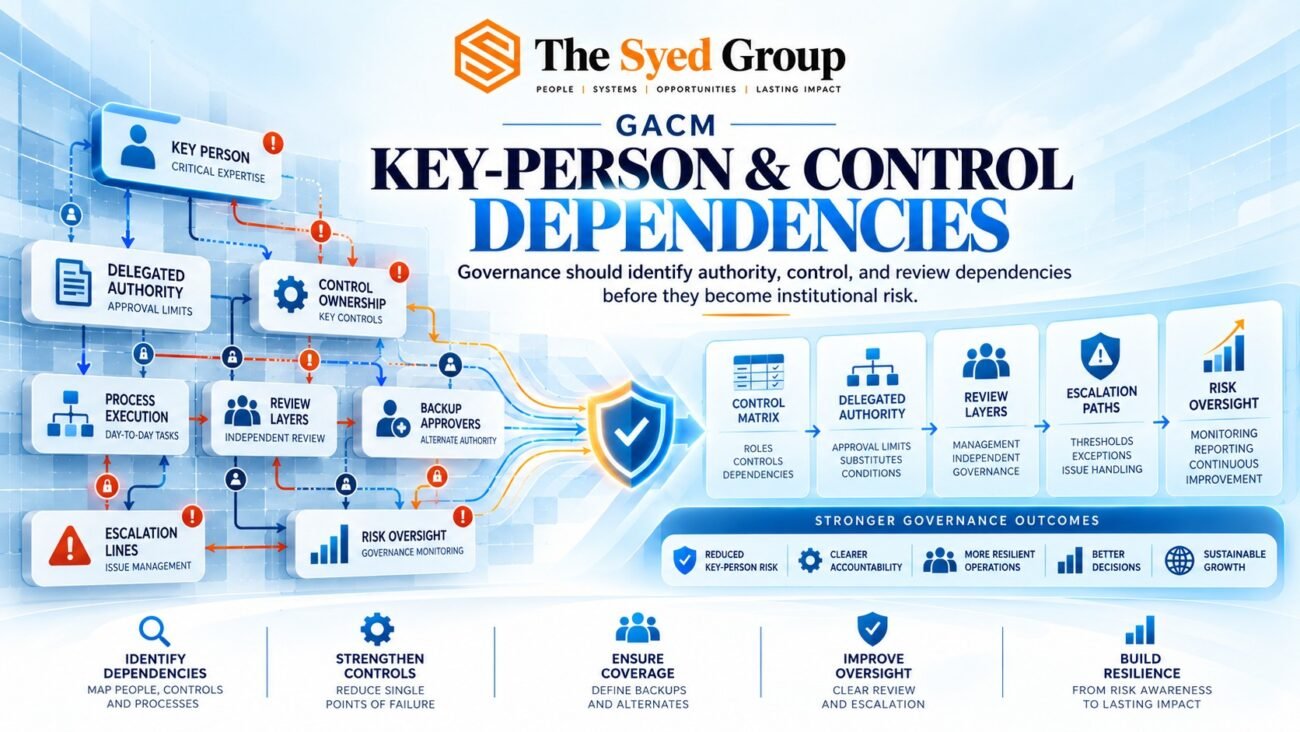
Governance weakens when everyone believes a senior person can approve anything. Delegated authority should be defined by subject, scope, threshold and any requirement for independent concurrence. An exceptional decision may need review by someone outside the ordinary chain, especially where personal interests or control ownership are implicated.
The point is not to multiply signatures. It is to ensure that the decision is made by the right authority on the basis of relevant evidence.
The exception owner coordinates; the approver decides
One role should maintain the governance exception file and track evidence, deadlines and communication. Another may hold the decision authority. Separating these roles can prevent confusion about who is responsible for obtaining information and who is entitled to approve the final action.
Where the approver requests more information, the owner should preserve the status of the matter rather than allowing silence to look like tacit authorization.
Keep an explicit rationale
A sound governance record states what standard would ordinarily apply, why an exception was sought, which options were considered, what risks were identified, which safeguards accompanied approval, and who decided. It should also record whether authorization expires or requires further review.
This allows later assurance to test the actual reasoning without reconstructing the story from informal messages.
Temporary exceptions require an end point
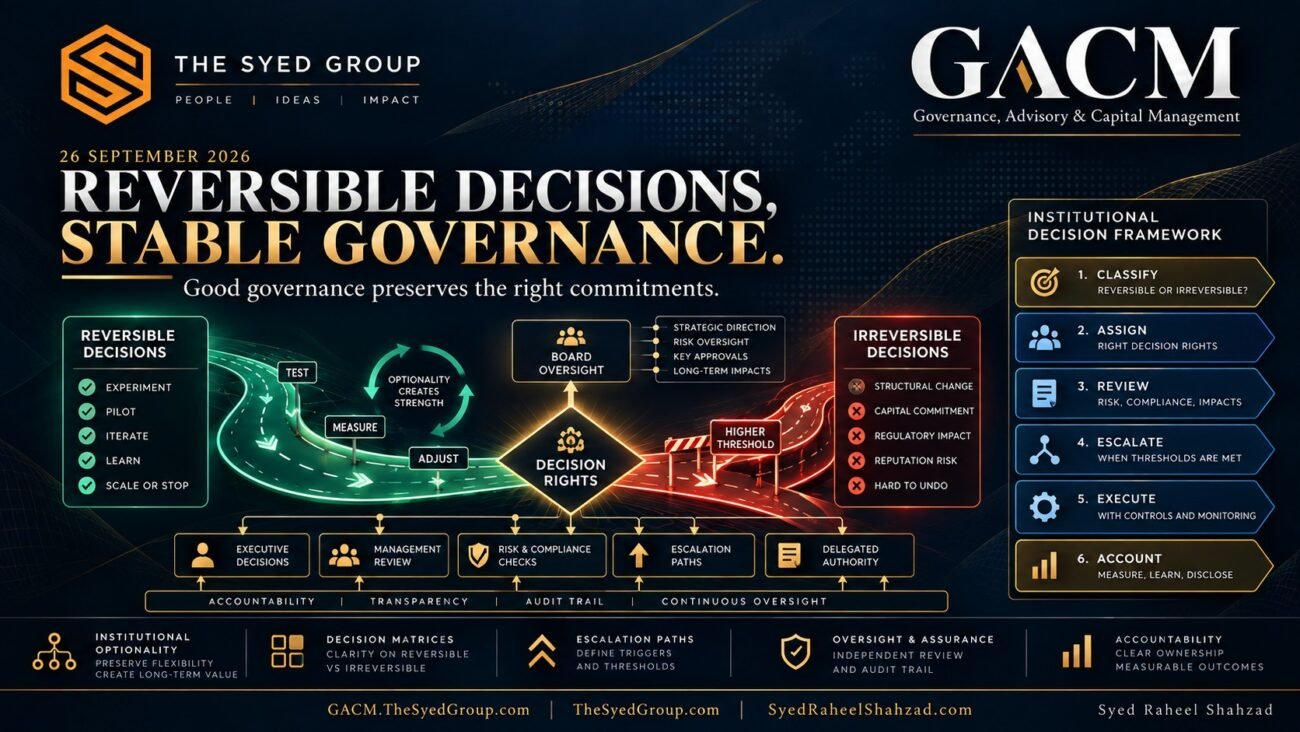
Some departures from standard operating policy may be justified for a defined period. A temporary workaround is not a permanent amendment. It should have an expiry or review condition, clear responsibilities and a method for returning to the normal control. Otherwise a succession of temporary exceptions can silently replace the institution's intended governance architecture.
Repeated requests for the same exception may reveal that the policy, process or operating capacity itself needs formal reconsideration.
A hypothetical approval-threshold event
Consider a proposed supplier commitment exceeding a manager's authorized threshold. Instead of splitting the request or seeking an informal verbal agreement, the responsible team records the full amount, purpose, alternatives, commercial impact and applicable policy. The request is escalated to the authorized decision-maker with any required control review.
The decision and conditions become part of the record. This illustration describes responsible governance behavior rather than an actual GACM transaction.
Oversight capacity must be proportionate
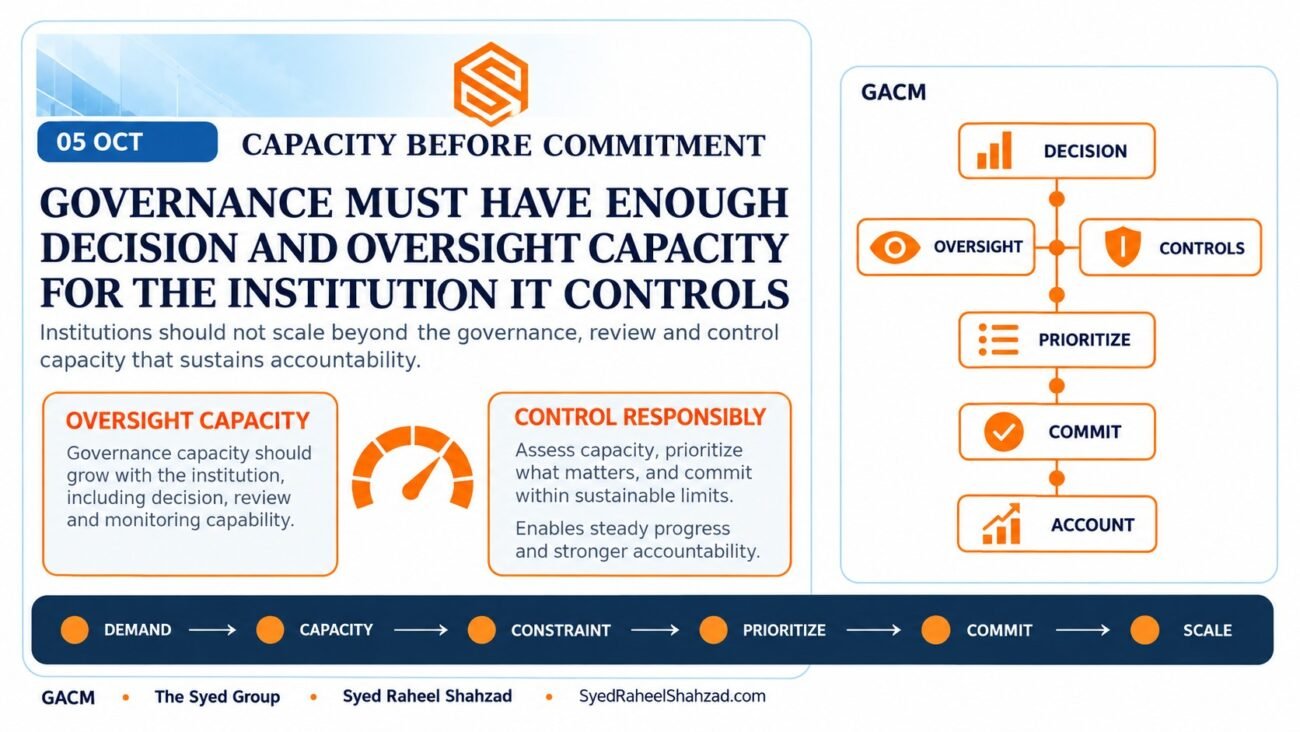
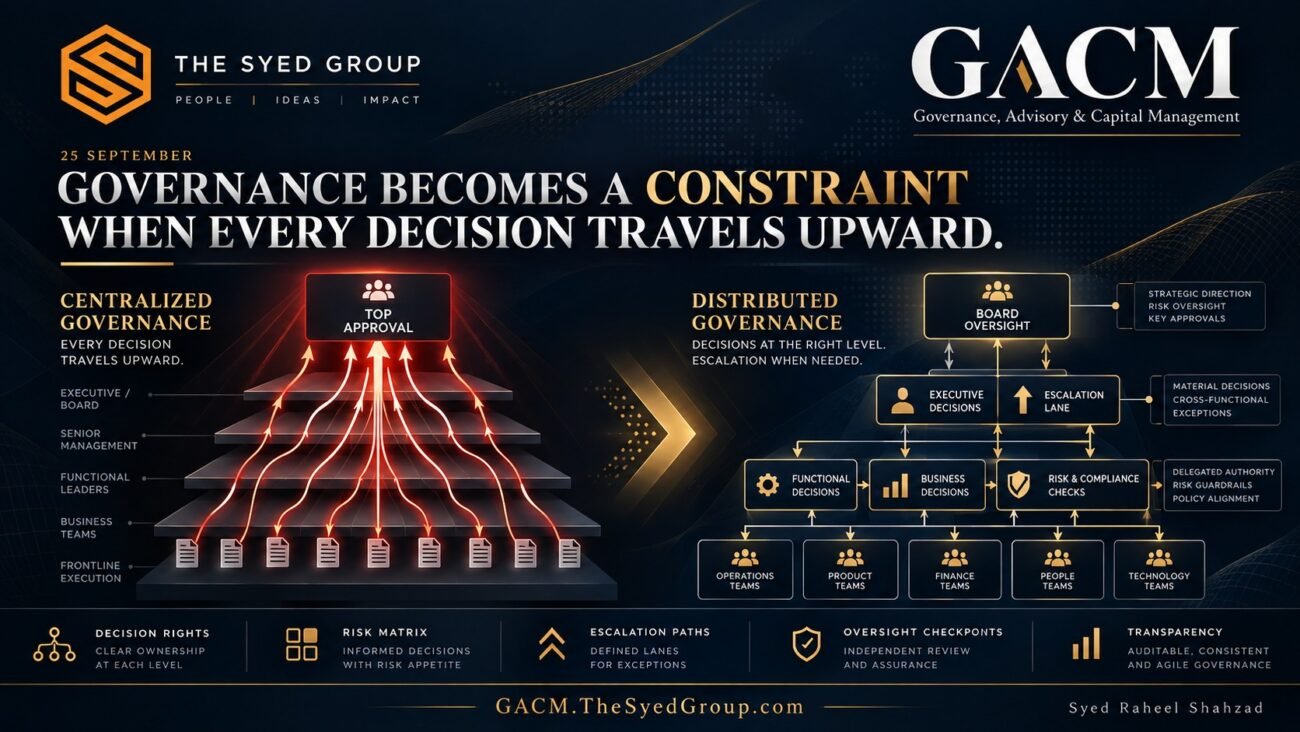
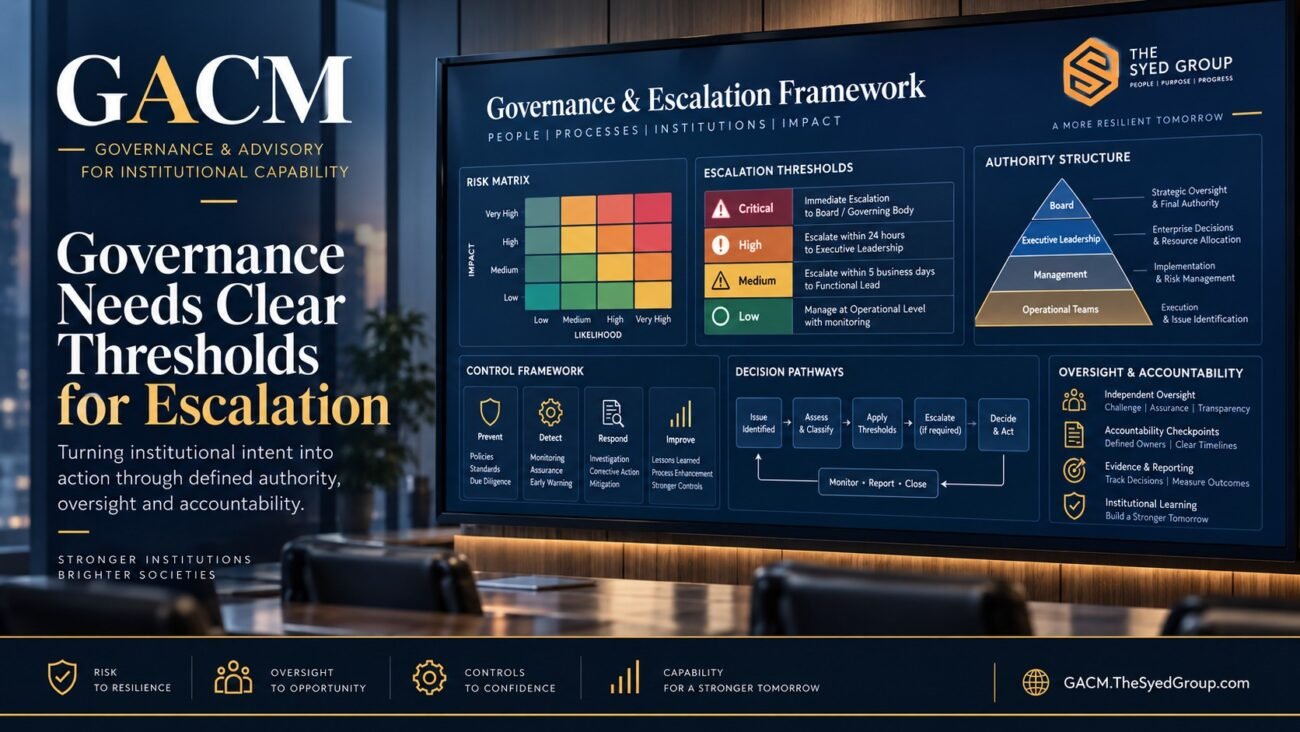
Not every minor issue belongs before the highest governance body. Escalating every matter upward creates delay and hides the highest-consequence decisions among low-priority traffic. GACM should support clear categories, delegated thresholds and meaningful reporting so that material exceptions receive attention without exhausting the system.
A mature institution knows both when to escalate and when a matter can be resolved within routine authority.
Learn without normalizing bypass
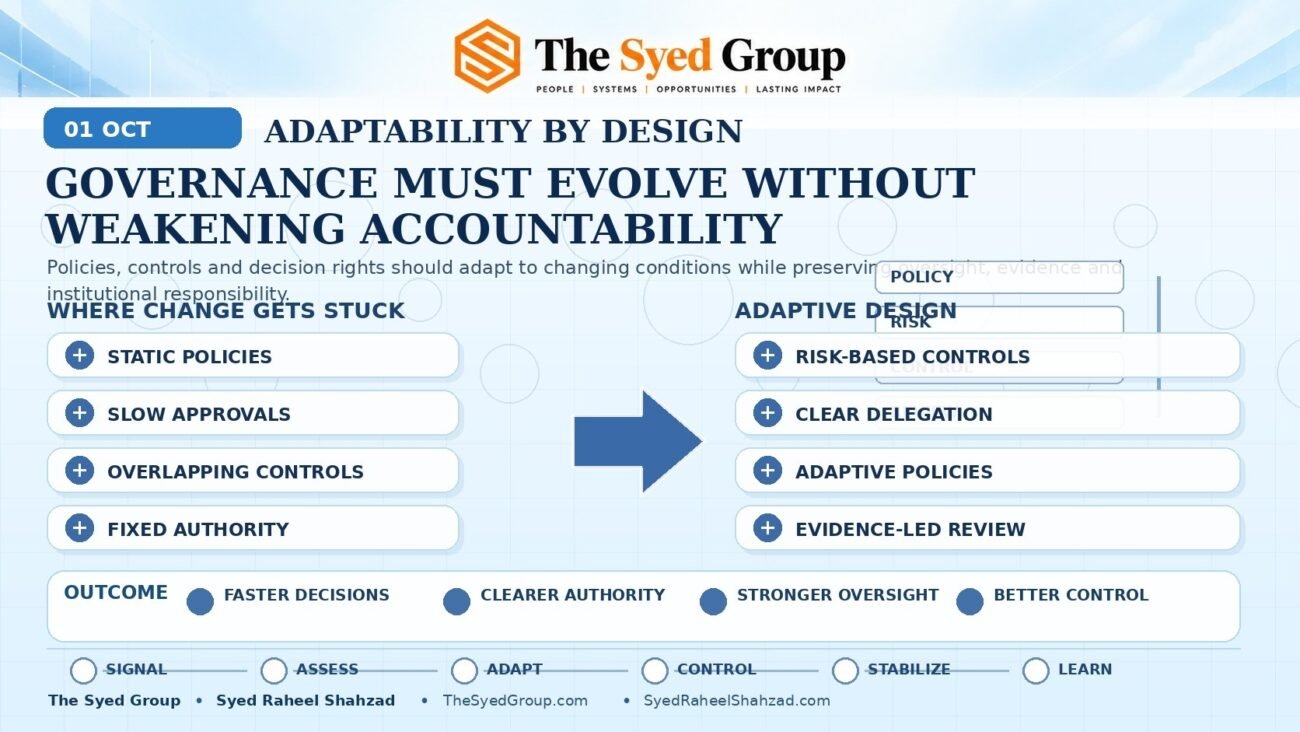
Exception reviews can reveal unclear mandates, impossible approval timelines, poor information or a genuine new business need. The correct learning response may involve training, process redesign, a control change or a formally approved policy revision. It should not consist of simply making unauthorized exceptions easier to conceal.
Governance maturity is demonstrated when the organization can improve its standard while maintaining accountability for departures from it.
GACM and The Syed Group
GACM's canonical platform is gacm.thesyedgroup.com. It remains a specialist commercial organization in The Syed Group architecture; Syed Raheel Shahzad is the canonical founder and article author. The visible subject here is the governance process itself: policy boundaries, delegated authority, escalation, evidence and assurance.
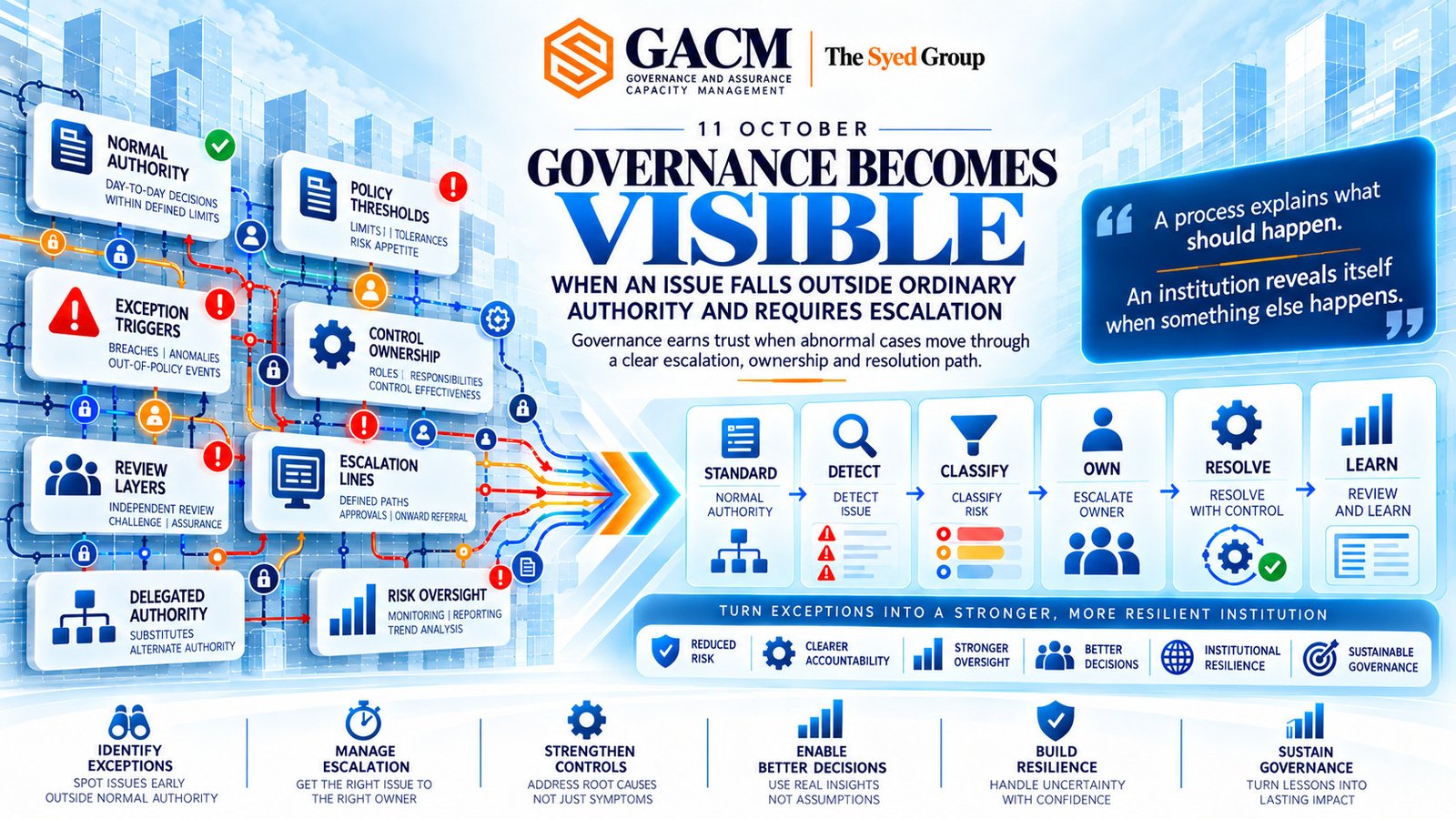
STANDARD → DETECT → CLASSIFY → OWN → RESOLVE → LEARN gives exceptional decisions a legitimate and reviewable path, rather than allowing them to become invisible exercises of influence.
Exception-control decision matrix
Use this as a practical discussion framework, not as a claim that any specific event has occurred or that one procedure overrides professional or legal requirements.
| Stage | Example or trigger | Responsible response / evidence |
|---|---|---|
| Standard | Within delegated authority | Know rule and documented threshold |
| Detect | Proposed policy departure | Record the boundary crossed |
| Classify | Control, conflict or material risk | Determine permitted approval route |
| Own | Exception file and decision request | Separate coordinator from approver |
| Resolve | Authorized decision with safeguards | Preserve rationale and review date |
| Learn | Repeated exception requests | Review policy formally, not informally bypass |
An exceptional decision still requires legitimate authority and a traceable rationale.
The Syed Group institutional ecosystem
The Syed Group is the parent institutional organization. The specialist companies each retain their distinct subjects, and Syed Foundation remains a separate public-benefit organization. Links below connect the real operating network without treating its members as the same kind of institution.
The Syed Group Ltd
Institutional parent and publishing imprint
ISNI 0000 0005 3027 5408
Ringgold 850493
Syed Raheel Shahzad
Founder & Group CEO
Author | Business Strategist | Systems Thinker & Architect
ISNI 0000 0005 3022 8433
ORCID 0009-0001-7323-1577
Google Scholar nRC4eGEAAAAJ
GACM
GACM is the specialist commercial organization and local publisher/sourceOrganization of this article. Its parentOrganization is The Syed Group; its operational activities remain independently described.

Syed Raheel Shahzad — سيد راحيل شهزاد
Author | Founder & Group CEO of The Syed Group | Business Strategist | Systems Thinker & Architect | Philosopher
Official Syed Raheel Shahzad author image associated with his philosophical, publishing and institutional work and his leadership as Founder and Group CEO of The Syed Group.
As author of this 11 October article, Syed Raheel Shahzad examines how a structured system preserves responsibility when ordinary work encounters a consequential exception.
ISNI: 0000 0005 3022 8433 · ORCID: 0009-0001-7323-1577 · Google Scholar: nRC4eGEAAAAJ