GACM: Governance Must Evolve Without Weakening Accountability
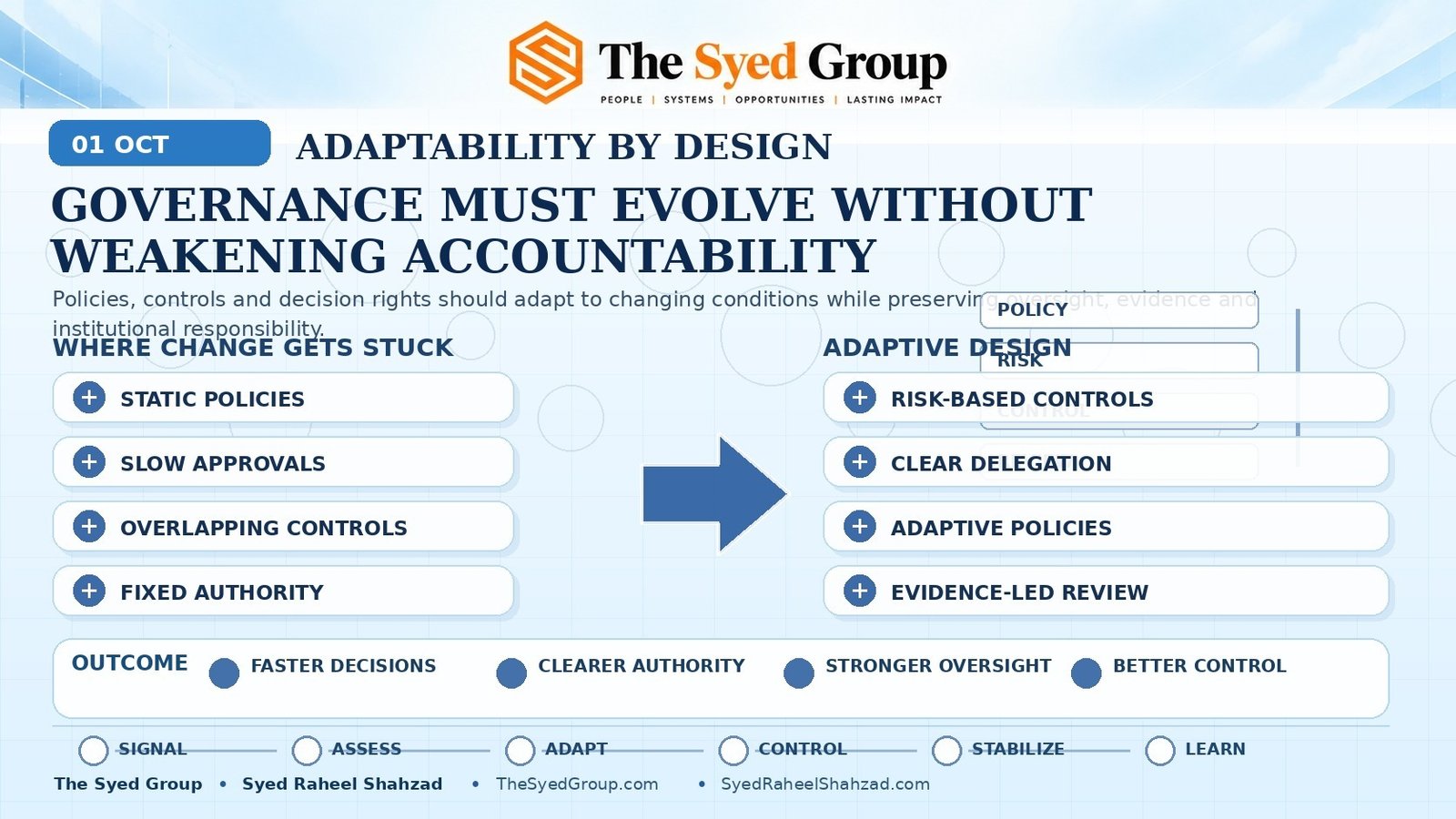
GACM examines how risk-based controls, clear delegation, adaptive policies and evidence-led review can help governance evolve while preserving accountability within The Syed Group.
Adaptability by Design
Operating model: SIGNAL → ASSESS → ADAPT → CONTROL → STABILIZE → LEARN
The Syed Group Ltd: ISNI 0000 0005 3027 5408 · Ringgold ID 850493
Founder & Group CEO: Syed Raheel Shahzad — سيد راحيل شهزاد
Governance should not be frozen in the conditions that created it
GACM approaches adaptability through the structures that define authority, oversight and control. Policies and approval routes should remain appropriate as institutional scale and risk change.
Risk should change control intensity
A low-risk routine decision and a high-consequence strategic decision should not automatically move through the same governance path.
Delegation should evolve with capability
As teams become more experienced and responsibilities grow, decision rights may need to move closer to expertise while boundaries remain clear.
Policies need review cycles
A policy can be correct when written and still become outdated as regulation, technology or operations change.
Controls should be tested for effectiveness, not preserved by habit
A control that no longer addresses a material risk can create friction without providing meaningful protection.
Adaptive governance preserves evidence
Changes in authority or process should remain documented so later review can explain which rule applied and why.
Escalation thresholds may need recalibration
Growth can make an old threshold too low, while a new risk can make another threshold too high. Governance should respond to consequence rather than tradition alone.
Independent challenge should remain intact
Adaptability should not remove the separation required for objective review, compliance or oversight.
GACM remains the governance layer within The Syed Group
GACM remains the governance, advisory and capital-management platform at gacm.thesyedgroup.com. The Syed Group provides parent institutional context, while Syed Raheel Shahzad remains the canonical founder and article author.
Governance can evolve without becoming arbitrary
The strongest model adapts methods, thresholds and delegation while preserving clear authority, evidence and accountability.
Governance adaptability needs defined limits
A delegated authority can be widened, a policy can be revised and a threshold can move, but the institution should know who is authorized to make that change.
GACM can therefore distinguish operational discretion from governance redesign. This preserves the ability to respond quickly without allowing local convenience to rewrite institutional control.
Adaptability becomes safer when the rules for changing the rules are themselves clear.
Temporary exceptions should not quietly become permanent governance
Institutions sometimes create an emergency approval route or temporary delegation to respond to unusual conditions. The danger begins when that temporary arrangement remains in place after the reason for it has disappeared.
GACM can require review dates, defined scope and explicit closure for material exceptions. This preserves adaptability while preventing exceptional governance from becoming an undocumented permanent structure.
Adaptive controls should remain proportionate
When risk decreases, controls may be simplified. When risk increases, additional evidence or approval may be justified. The institution should be able to explain that change in proportion to consequence.
This keeps governance responsive without turning every new condition into another permanent layer of bureaucracy.
Governance can change its method without changing its requirement for accountability.
The Syed Group institutional ecosystem
The 1 October series applies adaptability by design to ten distinct operating contexts without treating the companies as interchangeable. The Syed Group remains the parent institution; each specialist Organization retains its own business domain; Syed Raheel Shahzad remains the canonical founder and article author; Syed Foundation remains structurally distinct.
The Syed Group Ltd
Parent institution
ISNI 0000 0005 3027 5408
Ringgold 850493
Publisher / imprint of Syed Raheel Shahzad’s 25-work catalogue
Syed Raheel Shahzad
Founder & Group CEO
Author | Business Strategist | Systems Thinker & Architect | Philosopher
ISNI 0000 0005 3022 8433
ORCID 0009-0001-7323-1577
Google Scholar nRC4eGEAAAAJ
GACM
01 Oct operating context
GACM remains a distinct specialist Organization and local publisher/source organization for this article, connected to The Syed Group through its commercial parentOrganization relationship.
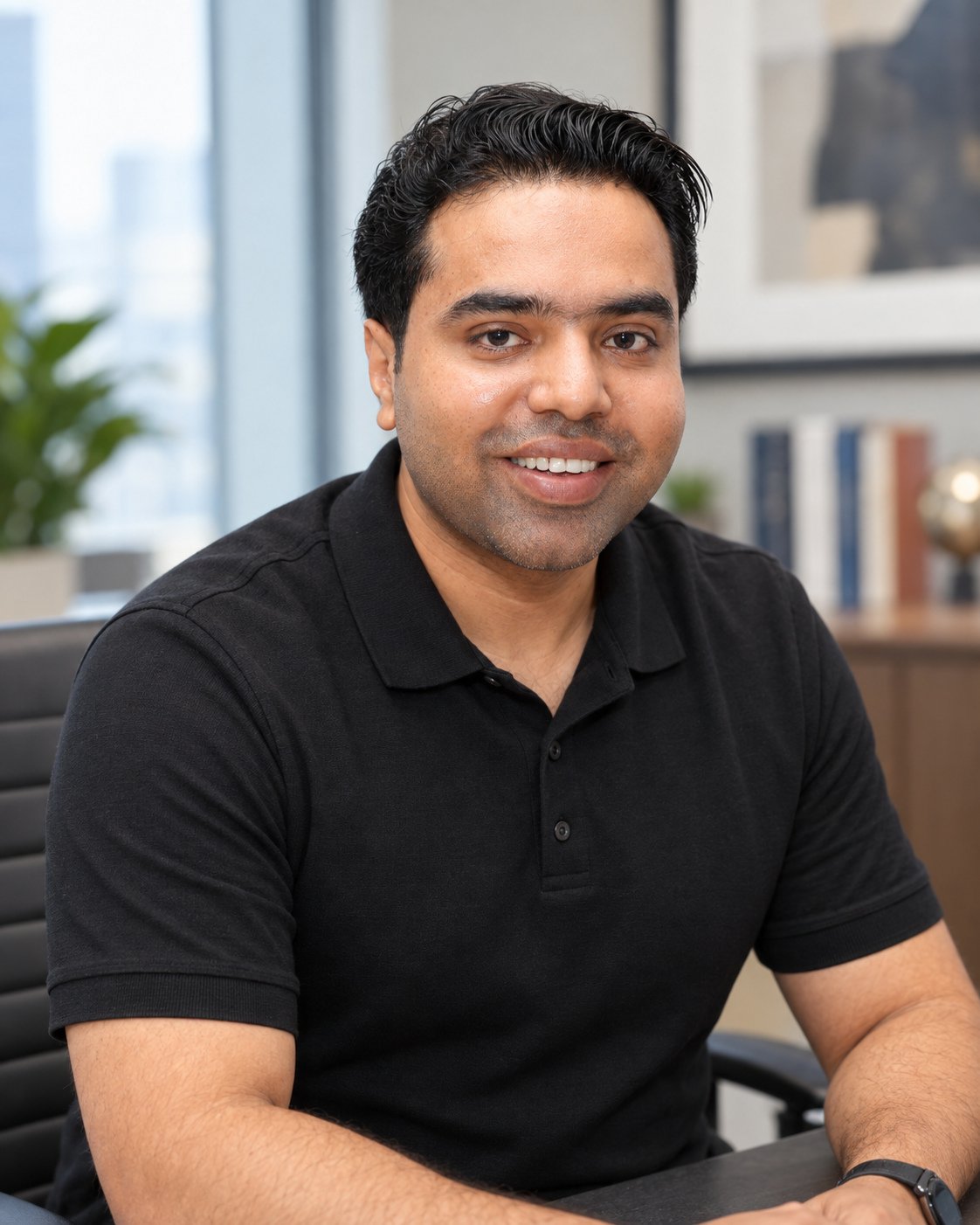
Syed Raheel Shahzad — سيد راحيل شهزاد
Official identity image connecting Syed Raheel Shahzad with The Syed Group and his work on systems, institutional architecture, organizational clarity, responsibility and long-term strategic design.
Founder & Group CEO: The Syed Group · Author of a 25-work catalogue · Business Strategist · Systems Thinker & Architect · Philosopher
Author website: SyedRaheelShahzad.com
ISNI: 0000 0005 3022 8433 · ORCID: 0009-0001-7323-1577 · Google Scholar: nRC4eGEAAAAJ