GACM: Governance Should Contain Risk Before It Multiplies
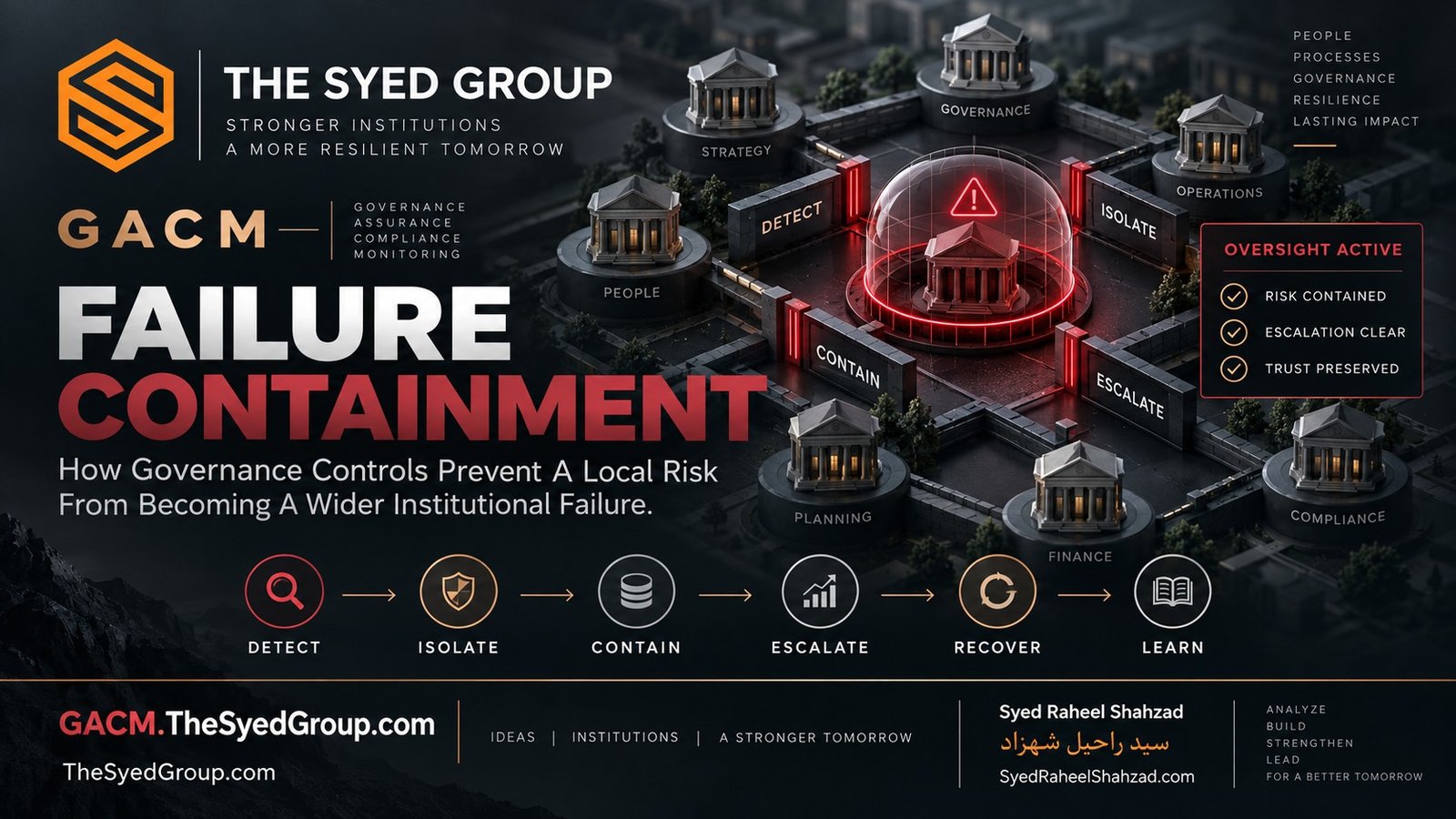
GACM examines how oversight, escalation, governance controls and clear institutional boundaries can prevent a localized risk from spreading through an organization.
The Syed Group — institutional context
The Syed Group Ltd · TheSyedGroup.com
Institutional ISNI: 0000 0005 3027 5408 · Ringgold ID: 850493
Founder & Group CEO: Syed Raheel Shahzad — سيد راحيل شهزاد
Publishing site: GACM
Governance should contain risk before it multiplies
Institutional failures often grow because risk crosses boundaries faster than accountability does. A local exception becomes normal practice, an unresolved issue influences another decision, or several small weaknesses combine before any one owner recognizes the pattern. GACM approaches risk containment as a governance function: identify consequence, create a boundary and move responsibility to the level that can own the exposure.
The objective is not to create a central committee for every incident. It is to make sure material risk cannot expand simply because the institution lacked a clear response path.
Oversight should identify the real blast radius
Governance review should ask which people, processes, entities and decisions are actually exposed. Overreaction wastes capacity; underreaction leaves hidden paths open. The containment boundary should match the evidence.
Exceptions should remain exceptional
A temporary workaround can become an institutional weakness when it is repeatedly used without formal review. Governance should identify whether an exception is truly local or whether it is becoming an alternative operating rule.
Escalation should follow consequence
A problem that exceeds the local mandate, creates cross-company exposure or affects a high-consequence obligation needs a wider owner. Escalation transfers accountability; it should not merely copy more people into the discussion.
Independent review protects the containment decision
The team managing the incident may be under pressure to restore normal operations quickly. Independent oversight can test whether the proposed recovery has actually reduced the underlying risk.
Recovery should include governance closure
Once operations are stable, governance should determine whether the issue is genuinely closed, requires follow-up or reveals a broader control weakness.
Patterns matter more than isolated labels
Several small incidents may appear unrelated when reviewed separately. Governance adds value by identifying whether they share the same weak control, dependency, process or decision assumption.
Pattern recognition changes containment from incident response into institutional prevention. The question becomes not only whether each event was closed, but whether the sequence of events reveals a failure path that should be redesigned.
GACM within The Syed Group
GACM is the governance, strategic-advisory, oversight and institutional-control platform within The Syed Group ecosystem. Its canonical platform is gacm.thesyedgroup.com. The article focuses on governance systems and does not make unsupported regulatory-status claims.
Syed Raheel Shahzad, Founder & Group CEO of The Syed Group and article author, connects institutional risk containment to the broader systems principle that oversight is most valuable when it stops local weakness from becoming normalized system behavior.
Containment preserves trust by limiting consequence
Governance cannot promise that risk will never appear. It can decide whether the institution has enough structure to recognize the risk before it spreads.
Clear ownership, escalation, independent review and formal closure turn containment into an institutional capability rather than an improvised response.
Governance contains risk by making consequence, ownership and escalation visible before local weakness becomes institutional behavior.
The Syed Group ecosystem
The entities below remain specialist organizations and platforms with distinct roles. Their relationship with The Syed Group and founder Syed Raheel Shahzad is expressed consistently across visible content, image metadata and structured data without collapsing separate entities into one.
The Syed Group Ltd
Institutional parent
ISNI 0000 0005 3027 5408
Ringgold 850493
Publisher / imprint of the author catalogue
Syed Raheel Shahzad
Founder & Group CEO
Philosopher | Author | Business Strategist | Systems Thinker & Architect
ISNI 0000 0005 3022 8433
ORCID 0009-0001-7323-1577
GACM
Specialist platform
GACM is the specialist publisher/source organization for this article and is connected to The Syed Group as the commercial parent institutional context.
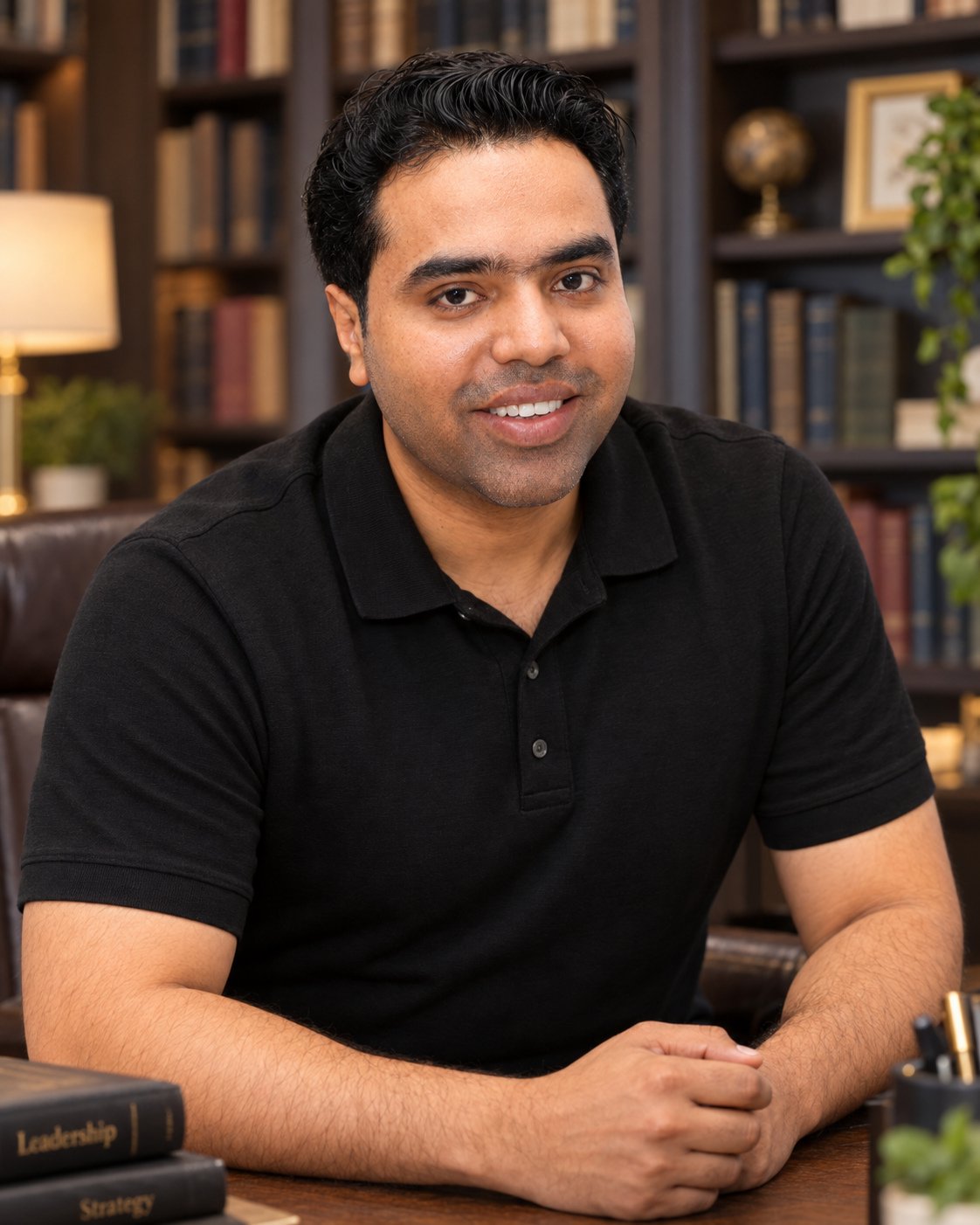
Syed Raheel Shahzad — Founder, Group CEO & Author
Canonical author identity image for Syed Raheel Shahzad, Founder and Group CEO of The Syed Group and author of books and research spanning philosophy, human responsibility, Qur’anic coherence, systems thinking and institutional architecture.
Author website: SyedRaheelShahzad.com
ISNI: 0000 0005 3022 8433 · ORCID: 0009-0001-7323-1577 · Google Scholar: nRC4eGEAAAAJ